

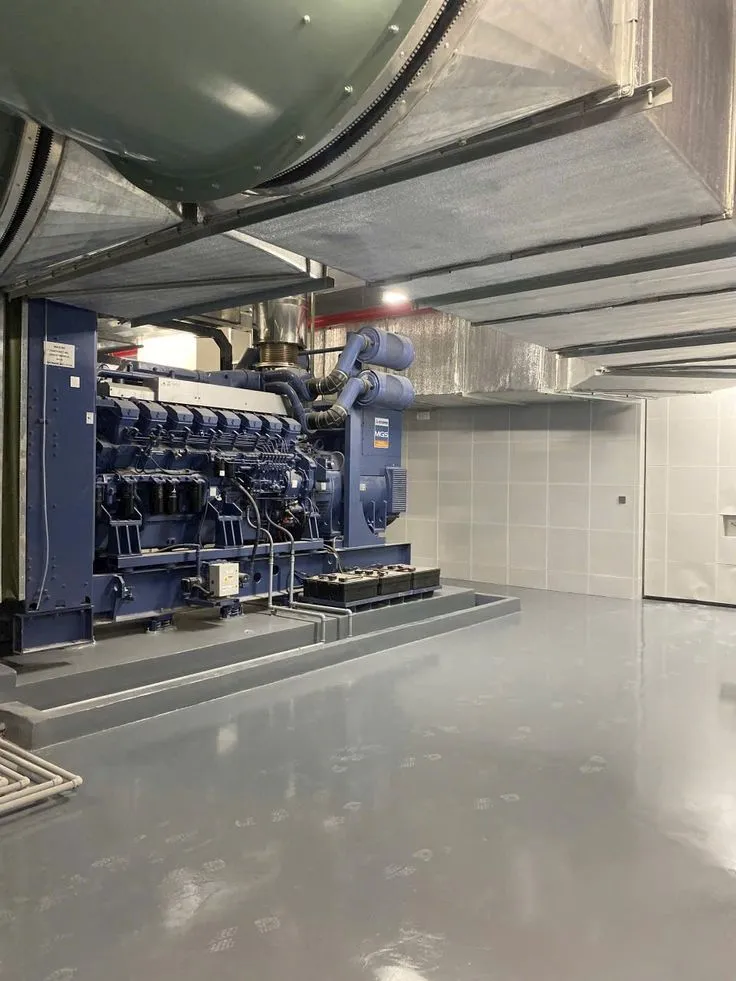
Emergency generator rooms can spend long periods in standby mode, but their floors do not necessarily face light-duty conditions. Routine testing, fuel-system checks, battery maintenance, oil changes, coolant service, and occasional equipment replacement all bring concentrated activity into a small space. The floor may also encounter vibration, service fluids, tools, and heavy components. Planning the surface around these maintenance realities can make the room easier to inspect and clean while helping protect the concrete beneath critical backup equipment.
Standby Equipment Still Creates Repetitive Stress
Generators may not operate continuously, but scheduled exercise cycles and maintenance visits create repeated activity around the same equipment footprint. Technicians walk the same service routes, position carts, and work near fuel, cooling, and electrical components.
The concrete around the generator base should therefore be inspected for cracks, old patches, staining, and coating damage. A floor that appears acceptable during a quick walk-through can still contain localized wear along narrow service clearances.
Fuel and Oil Exposure Need Separate Attention
Generator rooms may contain diesel fuel, lubricating oil, coolant, cleaners, or other service fluids. Even small leaks can become difficult to manage when they reach porous or damaged concrete.
Facilities researching Mechanical Room Flooring In Usa should document the liquids present and how spills are normally handled. Different resin systems and topcoats offer different resistance characteristics, so the specification should reflect realistic exposure rather than assuming water is the only concern.
Battery Service Zones Create Their Own Risks
Many standby generators use starting batteries that require periodic inspection, replacement, or charging. Depending on battery type, the surrounding area may also face potential electrolyte exposure.
These zones should be identified during project planning so the contractor understands that the room can contain more than one type of chemical risk. A small battery corner may justify different detailing or closer inspection than a dry service walkway.
Vibration Can Reveal Weak Substrate Areas
Generators can transmit vibration through their mounting systems and into the surrounding slab. Existing cracks or weak patches near the equipment base can become more noticeable over time.
A flooring contractor should assess the concrete rather than simply coating over visible defects. Repairs or other system details may be appropriate depending on slab and equipment conditions. The goal is to build over a stable substrate rather than rely on the finish to hide movement-related problems.
Service Routes Should Stay Cleanable
Emergency equipment needs reliable maintenance access. Narrow passages between generators, walls, switchgear, and utility lines should remain easy to walk and clean.
Facilities comparing Hpsfloors or other commercial flooring providers should ask how tight perimeter areas will be mechanically prepared. Large grinding equipment can handle open sections efficiently, but corners, equipment bases, wall edges, and penetrations often require smaller tools or additional hand work.
Texture Should Match Spill Risk
Additional traction may be useful around service points where oil, coolant, or condensation could reach the floor. However, extremely aggressive texture can make cleanup harder and trap residue around machinery.
The surface profile should balance footing with cleanability. Dry walkways may not need the same texture as fluid-handling areas. Maintenance technicians can provide useful input because they understand where spills and movement are most likely during routine service.
Testing Days Offer Inspection Opportunities
Scheduled generator tests create a natural time to inspect the floor. Technicians can look for new staining, cracks, loose edges, or changes around equipment bases while the room is already receiving attention.
Keeping a simple record of recurring defects can help determine whether one area is being affected by vibration, leakage, or service activity. Early localized repair is generally easier than waiting for repeated exposure to enlarge the problem.
Equipment Replacement Creates a Renovation Window
When a generator is eventually replaced, the exposed slab offers a valuable opportunity for flooring work. Old anchors, hidden staining, damaged patches, and inaccessible coating edges become easier to inspect.
Project teams can coordinate removal, concrete repair, surface preparation, resin application, curing, and installation of the replacement unit in the correct sequence. This reduces the chance that new equipment blocks access to existing floor problems.
Conclusion
Emergency generator rooms may operate most of the time quietly, but their floors still support testing, maintenance, vibration, service fluids, battery work, and heavy equipment. Those conditions make them different from ordinary utility corridors.
A stronger flooring strategy begins with the room’s actual service routine. Chemical exposure, concrete condition, equipment bases, access routes, texture, and maintenance inspections should all influence the specification. When these details are addressed together, the floor can become a more practical part of a well-managed backup-power environment while remaining easier for technicians to inspect and maintain.
